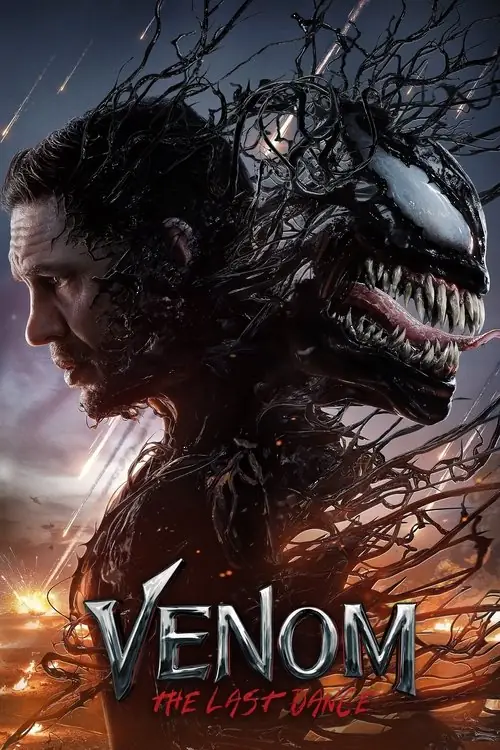
Venom: The Last Dance
REEL ENTRY · SCI-FI · NOTES FROM TOMORROW
The concluding chapter of this unexpectedly poignant symbiotic saga arrives with a gravity that transcends its superheroic trappings, delivering a meditation on partnership, sacrifice, and the terrible beauty of choosing whom we cannot live without. The host and his alien counterpart find themselves pursued across dimensions by forces that regard their union as an abomination — military apparatuses and extraterrestrial hunters alike converging upon the unlikely pair with relentless determination. The filmmaking ratchets the tension through cross-cutting between terrestrial and cosmic threats, each domain presenting its own distinctive register of menace. The visual effects have achieved a new fluidity, the symbiote's liquid choreography now expressing emotional states with an almost balletic expressiveness that previous installments only gestured toward.
What distinguishes this finale from the franchise's earlier entries is its willingness to sit in silence and let the bond between these two consciousnesses speak through gesture and absence. The comedic rhythms that defined their earlier interplay have matured into something approaching genuine pathos — their bickering now carries the undertone of two beings who have made each other's eccentricities inseparable from their own identity. The screenplay deploys humor not as deflection but as the vernacular of intimacy, each quip a small act of recognition between entities who understand each other as no one else possibly could. Several sequences achieve a lyrical melancholy rare in the genre, particularly a nocturnal conversation where the boundaries between self and other dissolve into something approaching spiritual communion.
CUT TO · THE PAGE TURNS
The climactic reckoning demands the kind of impossible choice that defines genuine sacrifice — not the theatrical martyrdom of conventional blockbuster fare but a quiet, devastating surrender born from the recognition that authentic devotion sometimes requires letting go. The direction handles this pivotal moment with admirable restraint, trusting the audience to feel the magnitude without editorializing. The action sequences, while spectacular, serve the emotional arc rather than substituting for it. What remains after the final frame is not the spectacle of combat but the ache of a farewell between two souls — one human, one not — who discovered in each other the thing that made existence bearable, and then had to relinquish it.
Source Reference
Original archive log: https://www.themoviedb.org/movie/912649?language=en-US