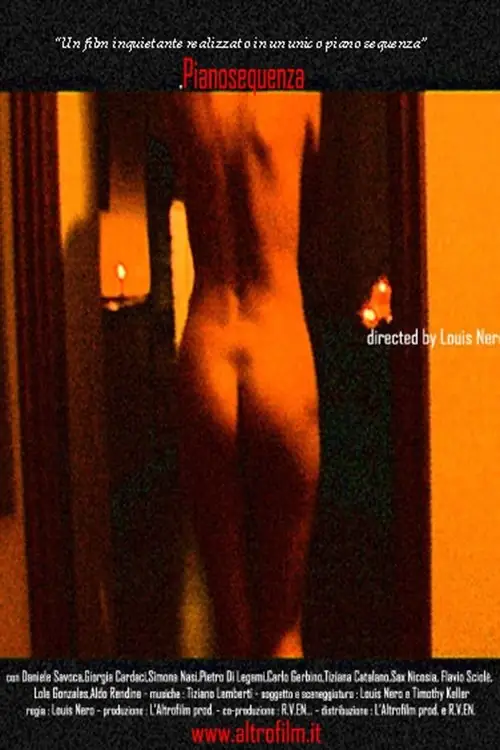
Pianosequenza
REEL ENTRY · SCI-FI · NOTES FROM TOMORROW
Crafted with the fluidity of an unbroken temporal sweep, this ensemble drama interlocks the trajectories of interconnected acquaintances whose desires and disappointments circulate through shared social space like currents within a single body of water. At the narrative's center stands a novelist paralyzed by his own exacting standards—-a man who composes sentences with the precision of a watchmaker yet cannot bring himself to declare any manuscript complete. His companion, sensing herself relegated to the margins of his attention, gravitates toward the orbit of a charismatic former classmate who collects admirers with the casual proficiency of a curator acquiring objects. From this nucleus, the drama ramifies outward: another woman attached to the circle finds her affections drawn toward an unexpected figure, while the novelist's patriarch engages in encounters with a woman of commodified intimacy whose professional existence illuminates the transactional undercurrents flowing beneath all the relationships on display.
The direction imposes a formal constraint that functions as both aesthetic strategy and philosophical proposition. By organizing the narrative as though observed through a continuous lens—-no cuts, no temporal ellipses, no editorial interventions—-the filmmaker forces the audience to inhabit the unmediated flow of lived experience, where conversations overlap, gestures carry unintended consequences, and no entity possesses privileged knowledge of the whole. The result is a cinema of radical presentness, in which every moment carries the weight of irrevocability. The performances achieve a quality of behavioral authenticity that transcends acting—-these figures breathe, hesitate, betray themselves through involuntary gesture in a manner that documentary footage seldom captures and fiction too rarely aspires to.
CUT TO · THE PAGE TURNS
The thematic architecture binds together questions of artistic integrity, erotic economy, filial obligation, and class stratification into a fabric of remarkable density. The novelist's creative stasis mirrors the relational stagnation afflicting every coupling in the drama; the companion's migration toward a patronage system reflects the universal temptation to exchange autonomy for recognition; the patriarch's pursuit of purchased intimacy lays bare the commodification that permeates even those bonds imagined to be exempt from market logic. The final image—-suspended, unresolved, refusing the satisfaction of closure—-insists that life, unlike art, does not arrange itself into satisfying configurations, and that the supreme honesty of cinema lies in its willingness to affirm this incompleteness rather than repair it.
Source Reference
Original archive log: https://www.themoviedb.org/movie/692383?language=en-US