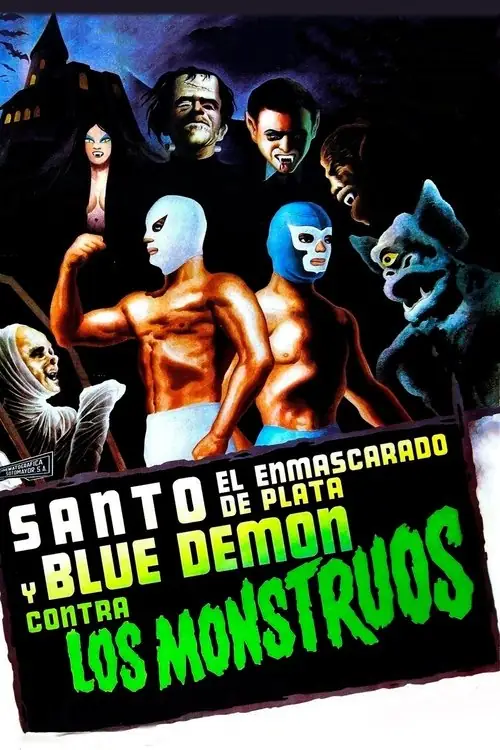
Santo and Blue Demon Against the Monsters
REEL ENTRY · SCI-FI · NOTES FROM TOMORROW
Occupy the intersection of horror iconography and luchador mythology—-a territory that only Mexican popular cinema has had the audacity to claim—-and you will find this exuberant exercise in genre alchemy. The narrative resurrects a malign researcher whose vendetta against his sibling and the sibling's daughter drives him to summon an improbable coalition of classical terrors: a lycanthrope, a reanimated corpse, a creature of vampiric nature, a bandaged revenant, and a one-eyed giant. Against this battalion of archetypal dread stands a masked grappler whose commitment to human preservation transcends the boundaries of rational explanation. The film operates within a logic of dream rather than causality—-events proceed according to the associative principles of nightmare, where adjacency implies connection and every shadow conceals a figure of ancestral fear.
The production design embraces its budgetary constraints as aesthetic virtue, conjuring environments of atmospheric potency through theatrical ingenuity rather than fiscal expenditure. Laboratory interiors bristle with apparatus that oscillates between the scientific and the occult; cavernous spaces recede into darkness that feels architecturally planned rather than photographically convenient. The creature renderings, while unlikely to provoke genuine terror in contemporary audiences, possess a sculptural charm that transcends their technical limitations—-these are monsters as folk art, their crudeness inseparable from their charisma. The wrestling sequences, integrated into the narrative with a casualness that defies structural convention, function as ritual interludes: demonstrations of physical virtue that prepare the hero for the supernatural trials awaiting him.
CUT TO · THE PAGE TURNS
The film's most fascinating dimension is its faith in the adequacy of embodied virtue against metaphysical menace. The hero's body—-disciplined, powerful, inviolable—-constitutes a rebuke to every form of corruption that the creatures represent: the lycanthrope's uncontrolled transformation, the vampire's parasitic consumption, the mummy's stagnant eternity. Each match between grappler and ghoul becomes an allegory of will against appetite, discipline against dissolution. The closing passages, in which the coalition of horrors is dispatched with a combination of athletic prowess and moral certainty, affirm a worldview in which righteousness manifests not as abstraction but as action—-a conviction that lends this ostensibly absurd entertainment an unexpected dignity.
Source Reference
Original archive log: https://www.themoviedb.org/movie/62925?language=en-US