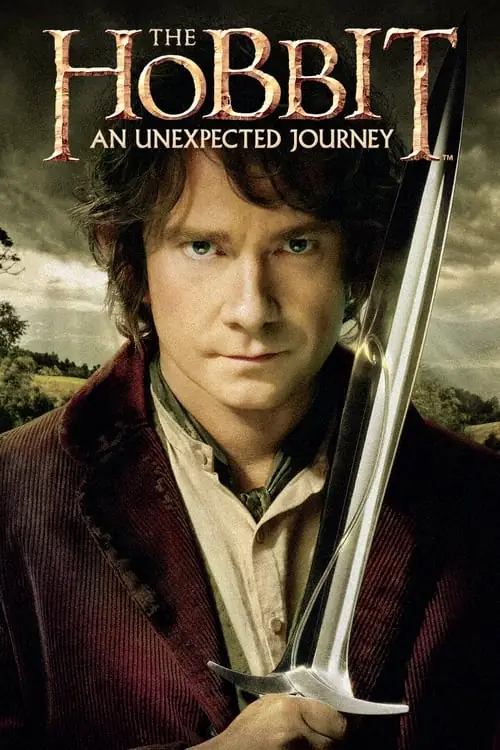
The Hobbit: An Unexpected Journey
REEL ENTRY · HORROR · LATE-NIGHT ENTRY
From the shire's verdant tranquility—-a realm of well-tended gardens and predictable rituals—-the narrative extracts its unlikely champion, a creature of domestic contentment whose appetites extend no further than second breakfast and the comfort of familiar walls. Into this parochial idyll arrives a wizard of considerable antiquity and ambiguous agenda, accompanied by a company of thirteen displaced dwarves whose sovereign claim upon an ancestral fortress has been usurped by a wyrm of immeasurable avarice. The proposition—-that a creature of negligible martial experience should accompany a military expedition across a continent bristling with perils—-is absurd on its face, and the film's early passages derive considerable humor from this absurdity. Yet beneath the comedy operates a conviction that courage resides not in the absence of terror but in the decision to proceed despite it, and that the most consequential journeys are those we never volunteered to undertake.
The visual realization achieves a magnitude that verges on the operatic. Subterranean caverns unfold with geological grandeur; mountain passes are rendered with the sublime menace of Romantic painting; and the creature designs—-particularly the wyrm whose hoarded treasure has become the dwarves' obsessive fixation—-possess a sculptural authority that digital effects frequently fail to achieve. The action sequences, while elaborately staged, maintain a responsiveness to character: every skirmish is shaped by the specific capacities and limitations of its participants rather than governed by abstract choreographic logic. The performances strike a register that balances grandeur with intimacy—-the dwarves are simultaneously figures of mythic stature and recognizable personalities contending with loss, and the central performance communicates the gradual transformation of complacency into resolve with a subtlety that the scale of the production might have crushed.
CUT TO · THE PAGE TURNS
The thematic architecture interweaves questions of home, belonging, and the cost of reclamation. The dwarves' fixation upon their stolen fortress carries the pathology of exile—-a grief that has curdled into entitlement—-and the narrative interrogates whether repossession can ever restore what displacement has altered. The ring acquired in darkness, meanwhile, introduces a counter-narrative of accumulation and corruption that will ramify across subsequent chapters. A foundational chapter in an epic of formidable ambition, executed with a craft that honors its literary antecedents while speaking the language of contemporary spectacle.
Source Reference
Original archive log: https://www.themoviedb.org/movie/49051?language=en-US