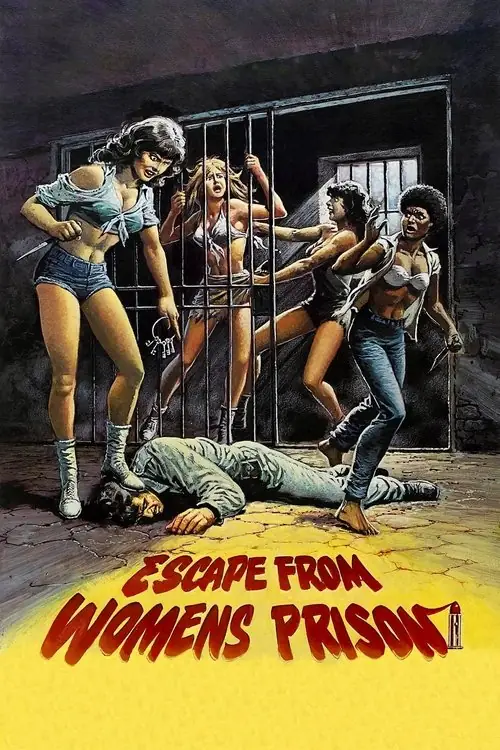
Escape from Women's Prison
REEL ENTRY · ACTION · PAGES TORN FAST
Operating within a genre tradition that has historically foregrounded exploitation over examination, this work presents the spectacle of institutional revolt and its aftermath with a confrontational directness that refuses aesthetic mediation. Four incarcerated women engineer their liberation from confinement and, in the chaos of departure, commandeer a vehicle transporting a contingent of athletic competitors to their next engagement. The convoy proceeds to the residence of the jurist responsible for the quartet's original sentencing, where the dynamics of captivity invert: the former captives now administer confinement, and the apparatus of punishment is turned upon its architect. The film's unflinching depiction of what transpires within those walls—-physical coercion, psychological degradation, the systematic stripping of dignity—-constitutes both its most provocative content and its most substantive claim upon serious attention.
The direction navigates the demands of genre spectacle and social commentary with a pragmatism that seldom sacrifices one for the other. Sequences of violence are staged with a visceral immediacy that honors the tradition's expectation of transgressive content while embedding that content within a framework of institutional critique. The incarceration system, the judiciary, and the economic conditions that channel particular populations toward confinement are all subject to scrutiny, not as editorial asides but as structural features of the narrative itself. The performances, particularly from the quartet of leads, invest their characters with a fury that exceeds individual grievance and approaches collective rage—-the rage of those who recognize their persecution as systemic rather than circumstantial.
CUT TO · THE PAGE TURNS
The treatment of the captives' retaliation against the jurist raises questions that the film declines to answer neatly. Is the inversion of power a form of justice, or does it merely replicate the logic it opposes? The narrative's refusal to sentimentalize its protagonists—-they are capable of cruelty, of shortsightedness, of the same abuses they have suffered—-distinguishes it from the reflexive romanticization of rebellion that afflicts lesser entries in the cycle. The closing images, which offer no catharsis and no reform, insist that the structures producing this violence remain intact, and that the spectacle we have witnessed is symptom rather than aberration. A raw, confrontational work that earns its provocations through the rigor of its commitments.
Source Reference
Original archive log: https://www.themoviedb.org/movie/40135?language=en-US