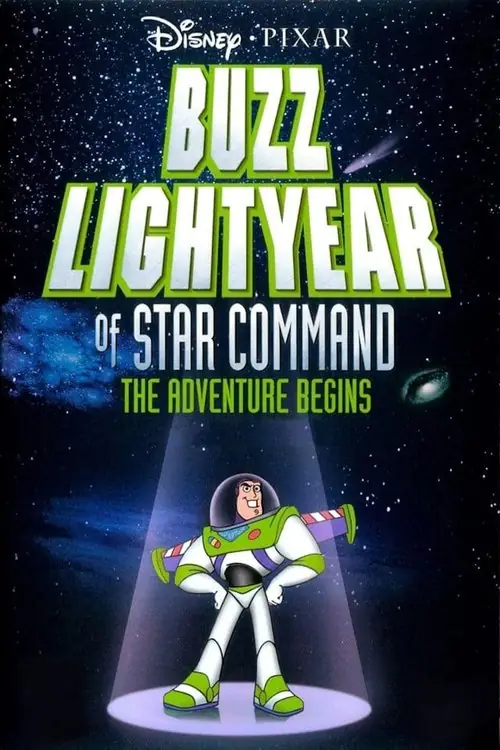
Buzz Lightyear of Star Command: The Adventure Begins
REEL ENTRY · SCI-FI · NOTES FROM TOMORROW
Expanding the mythology of a beloved toy-line property into the boundless territory of interstellar adventure, this animated feature recontextualizes its hero as a figure within his own narrative universe—-the fictional space ranger whose exploits inspired the merchandise that populated a child's bedroom. The premise thus operates on a fascinating meta-fictional layer: we are watching the story that the toy believes himself to inhabit, a fiction within a fiction that nevertheless demands to be experienced on its own terms. The narrative pits the officer against an intergalactic tyrant of considerable megalomania, but the dramatic engine resides in the composition of his team—-three aspirants who insist upon participation despite their evident lack of qualification, their enthusiasm functioning as both comic engine and philosophical proposition about the nature of heroism's prerequisites.
The animation achieves a fluidity and expressive range that honors the theatrical tradition from which the property originates while establishing its own visual identity. Character designs translate three-dimensional toy aesthetics into two-dimensional dynamism without sacrificing tactile appeal—-these figures retain the geometry of manufactured objects while acquiring the suppleness of drawn performance. The action sequences are choreographed with a spatial intelligence that allows the audience to comprehend the physics of each confrontation: trajectories are legible, impacts carry consequence, and the editing prioritizes coherence over stimulation. The vocal performances navigate the tonal requirements of comedy and adventure with a professionalism that never slips into complacency—-each line reading discovers specificity where laziness would have settled for adequacy.
CUT TO · THE PAGE TURNS
The thematic substance, while accessible to younger audiences, operates on frequencies that reward older viewers. The question of what qualifies one for heroism—-innate aptitude or committed effort—-is explored through the trio's gradual accumulation of competence, their failures as instructive as their successes. The antagonist, meanwhile, embodies a vision of power that equates domination with worth, a philosophy the narrative dismantles by demonstrating that authority divorced from service is merely tyranny in costume. The closing passages, which affirm the value of collaborative effort over individual brilliance, communicate their message through narrative event rather than editorial pronouncement—-a distinction that separates enduring family filmmaking from its more didactic competitors.
Source Reference
Original archive log: https://www.themoviedb.org/movie/16187?language=en-US