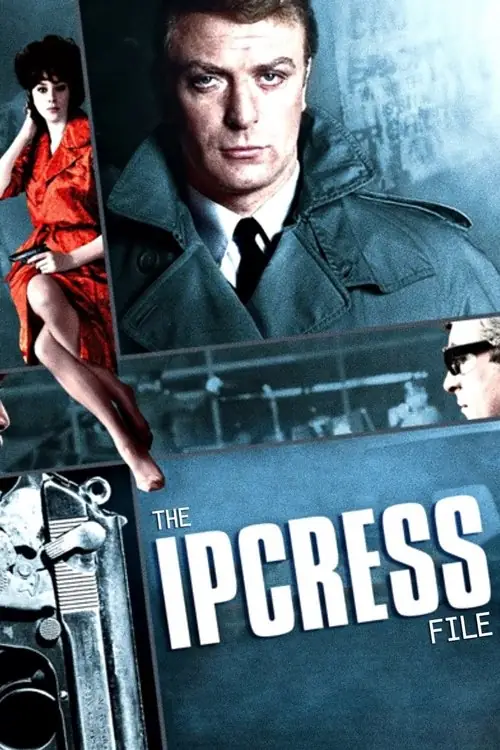
The Ipcress File
REEL ENTRY · ACTION · PAGES TORN FAST
The antithesis of every suave espionage fantasy, this seminal Cold War thriller reimagines the spy genre as a grubby, bureaucratic odyssey through the corridors of institutional paranoia. Its reluctant protagonist — a cockney operative whose insubordination is matched only by his competence — receives an assignment to audit the internal integrity of the nation's clandestine apparatus, a commission that immediately marks him as expendable in the eyes of his superiors. The filmmaking strips away every trace of glamour: the lighting is flat and institutional, the locations drearily authentic, the violence sudden and graceless. This is espionage as office politics conducted with lethal means, where memos carry the weight of death sentences and the most dangerous adversaries are not foreign operatives but colleagues with competing agendas.
The narrative plunges our investigator into a labyrinth of betrayal that extends to the highest echelons of the establishment, where abductions and assassinations are merely instruments of policy. The discovery that a mole has burrowed into the very core of the intelligence community triggers a purge that spares no one, and the protagonist's investigation becomes a survival exercise in an environment where trust is a luxury that gets you killed. The director stages the conspiracy with a methodical patience that mirrors the painstaking nature of counterintelligence work — long sequences of observation, analysis, and deduction punctuated by bursts of startling brutality. The sound design deserves particular mention, using industrial noise and distorted audio as instruments of psychological disorientation.
CUT TO · THE PAGE TURNS
What elevates the film beyond genre excellence is its class critique — the protagonist's working-class background renders him a perpetual outsider among the public-school mandarins who control the apparatus, his usefulness tolerated only insofar as it serves their purposes. The performance at the center captures this tension with a sardonic wit that never quite conceals the character's fundamental aloneness. The eyeglasses, the grocery shopping, the compromised living arrangements — these quotidian details accumulate into a portrait of espionage as daily grind rather than derring-do, establishing a template that would influence decades of subsequent screen fiction. A cornerstone of Sixties cinema, as vital and unsettling today as upon its initial release.
Source Reference
Original archive log: https://www.themoviedb.org/movie/15247?language=en-US