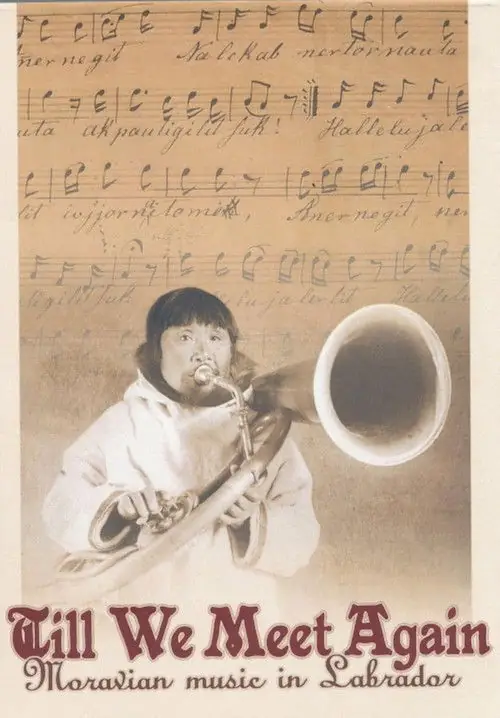
Till We Meet Again - Moravian Music in Labrador
REEL ENTRY · SCI-FI · NOTES FROM TOMORROW
The collision and eventual synthesis of European sacred practice with Indigenous cultural tradition receives a hauntingly beautiful examination in this documentary about an extraordinary musical heritage. During the seventeen hundreds, religious emissaries from Central Europe established settlements among the Inuit populations along the subarctic shores of North America, bringing with them hymns and liturgical compositions that would take root in soil far from their origins. What began as an instrument of spiritual persuasion gradually transformed into something the original practitioners could never have anticipated: a distinctive choral practice that absorbed the melodic sensibilities and vocal traditions of the host culture, producing a hybrid form of devotional expression that exists nowhere else on the planet. The film traces this evolution with a scholar's rigor and a poet's sensitivity.
The documentary assembles a remarkable array of archival materials and contemporary testimony to reconstruct the circumstances under which this musical synthesis occurred. Letters, diaries, and notated manuscripts reveal the complex dynamics between the newcomers and the Indigenous inhabitants—dynamics that encompassed genuine mutual respect alongside the cultural imperialism inherent in the missionary enterprise. The filmmakers refuse to simplify this complexity, acknowledging both the destructive aspects of colonial contact and the creative possibilities that emerged from the encounter. Recordings of modern performances demonstrate how the tradition has been preserved and adapted across generations, its vitality undiminished by the passage of centuries or the pressures of assimilation.
CUT TO · THE PAGE TURNS
What emerges most powerfully is the film's understanding of melody as a form of communication that transcends the limitations of language and ideology. The hymns that traveled across the Atlantic carried theological messages, certainly, but they also carried harmonic structures, vocal techniques, and aesthetic values that found unexpected resonance among a people with their own rich sonic heritage. The resulting fusion speaks to something universal about the human capacity to find meaning in organized sound. For audiences interested in the intersections of colonialism, cultural exchange, and artistic practice, this stands as an illuminating and deeply affecting document—one that testifies to the irrepressible creativity of the human spirit even under conditions of profound inequality.
Source Reference
Original archive log: https://www.themoviedb.org/movie/1465645?language=en-US